
Platypus Assembly GuideUpdated 6 days ago
Pre-Assembly Tips
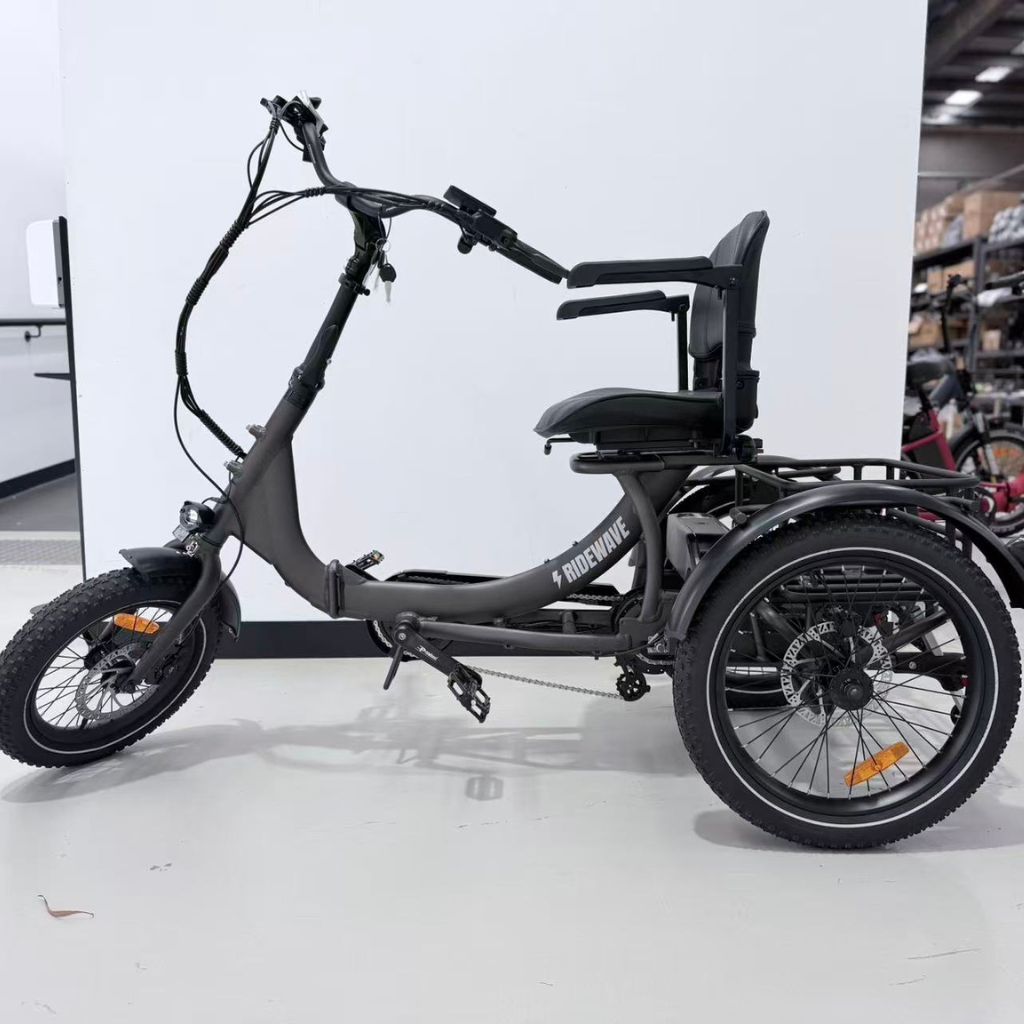
Welcome to the assembly manual for the Ridewave Platypus Folding eTrike. This guide will take you step-by-step through the process of assembling your new trike. Please read through the instructions carefully before starting to ensure a smooth assembly process. The trike arrives boxed for you to assemble. Preparing your Ridewave Platypus Folding eTrike is an exciting process! Here are some tips to ensure everything goes smoothly:
1. Keep a clean, open workspace for the assembly process.
2. Avoid using sharp tools near cables or wires to prevent accidental damage.
3. If you’re not confident assembling the trike, consider visiting a local trike shop for professional assistance.
4. The pre-assembly process requires only a pair of scissors, a cable cutter, and a utility knife (Stanley knife) to remove protective packaging.
The box includes the following items:
Ridewave Platypus Folding eTrike
Battery charger
User Manual
Battery keys
Toolkit bag containing:
8/10mm Wrench
13/15mm Wrench
13/16mm Wrench
2.5mm Hex Key
3mm Hex Key
4mm Hex Key
5mm Hex Key
6mm Hex Key
7mm Hex Key
Step 1: Unpack the Trike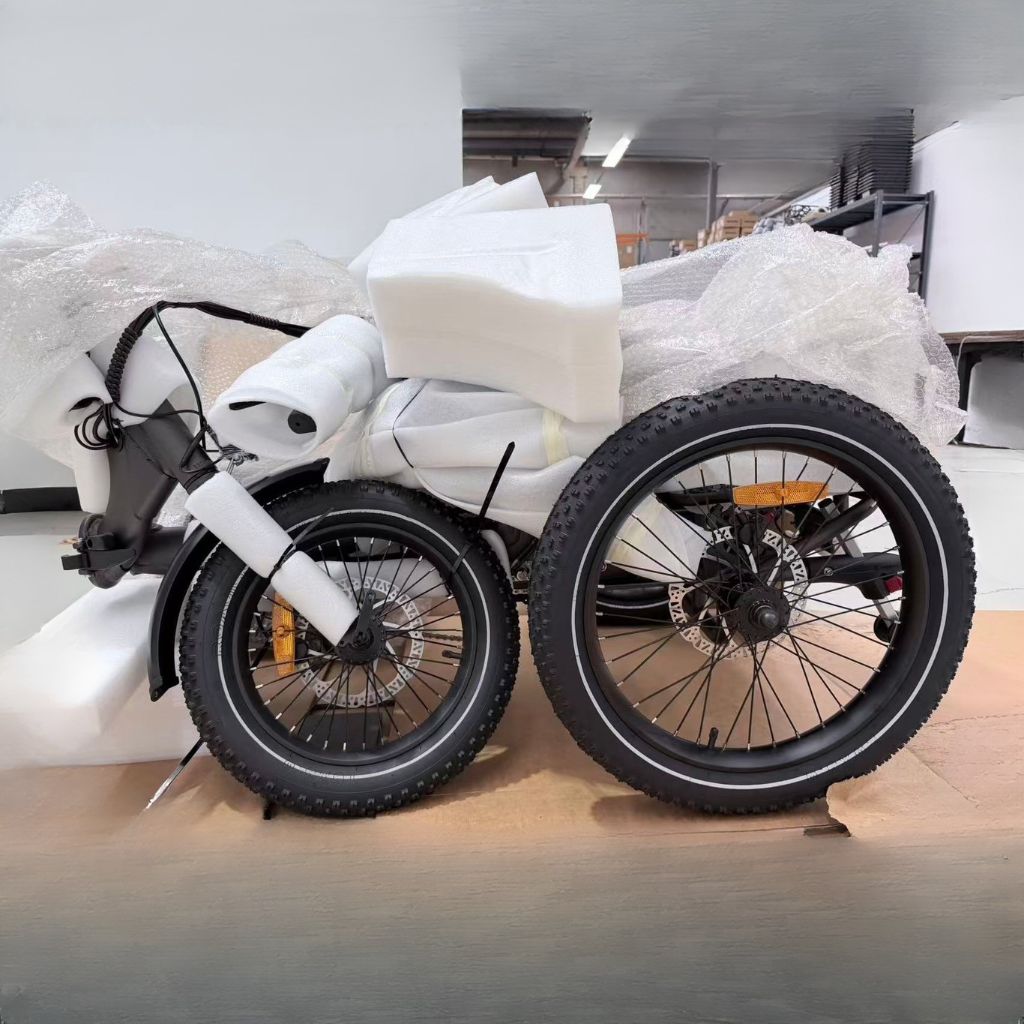
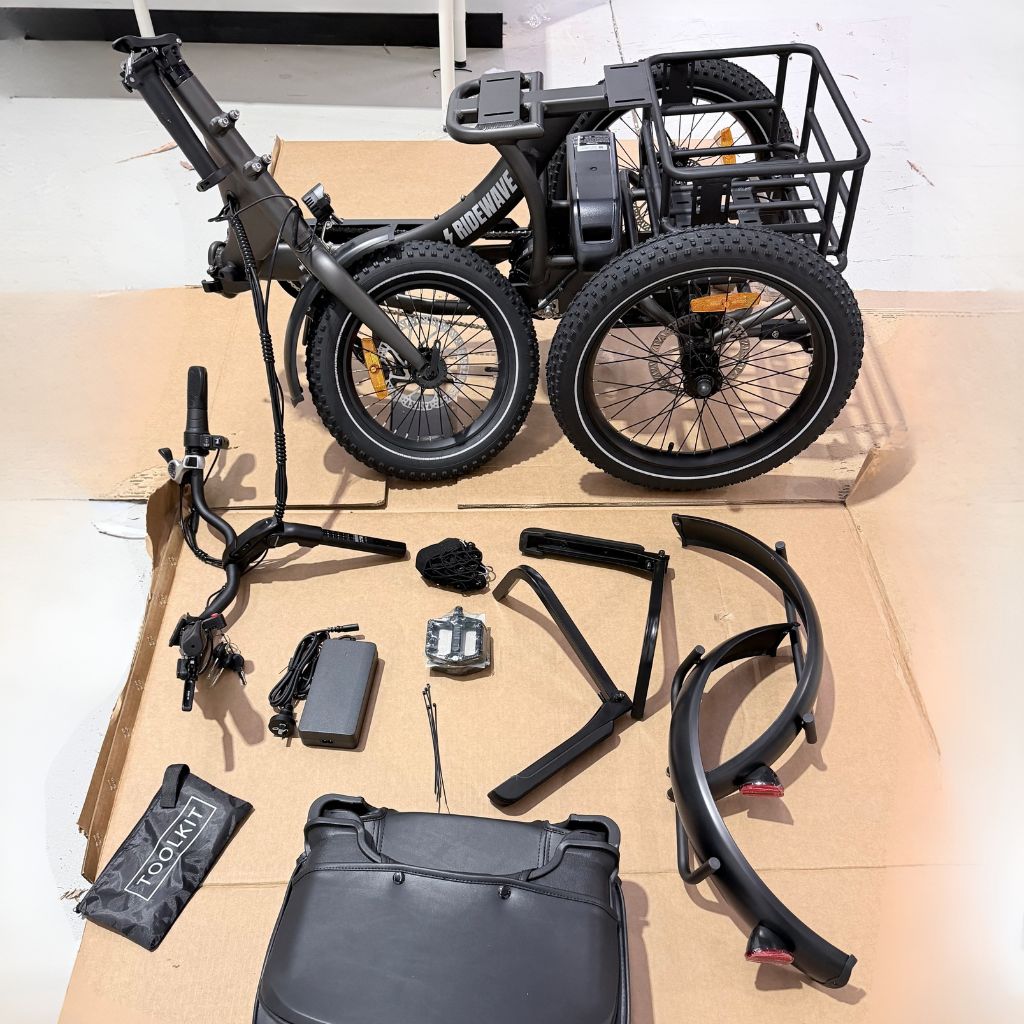
- Opening the box: Carefully open the box using scissors or a Stanley knife. Avoid cutting too deeply to prevent damaging the trike or accessories. Remove the loose items (seat, mudguards, etc.), and accessories box which contain essential tools and components.
- Getting the trike ready for unfolding: After removing the accessories box, lift the trike out with assistance or cut the sides of the box to make it easier to access. Remove all protective materials—including foam, cardboard, zip ties, and tape. Take extra care not to damage any cables when cutting zip ties.
Step 2: Unfold the Trike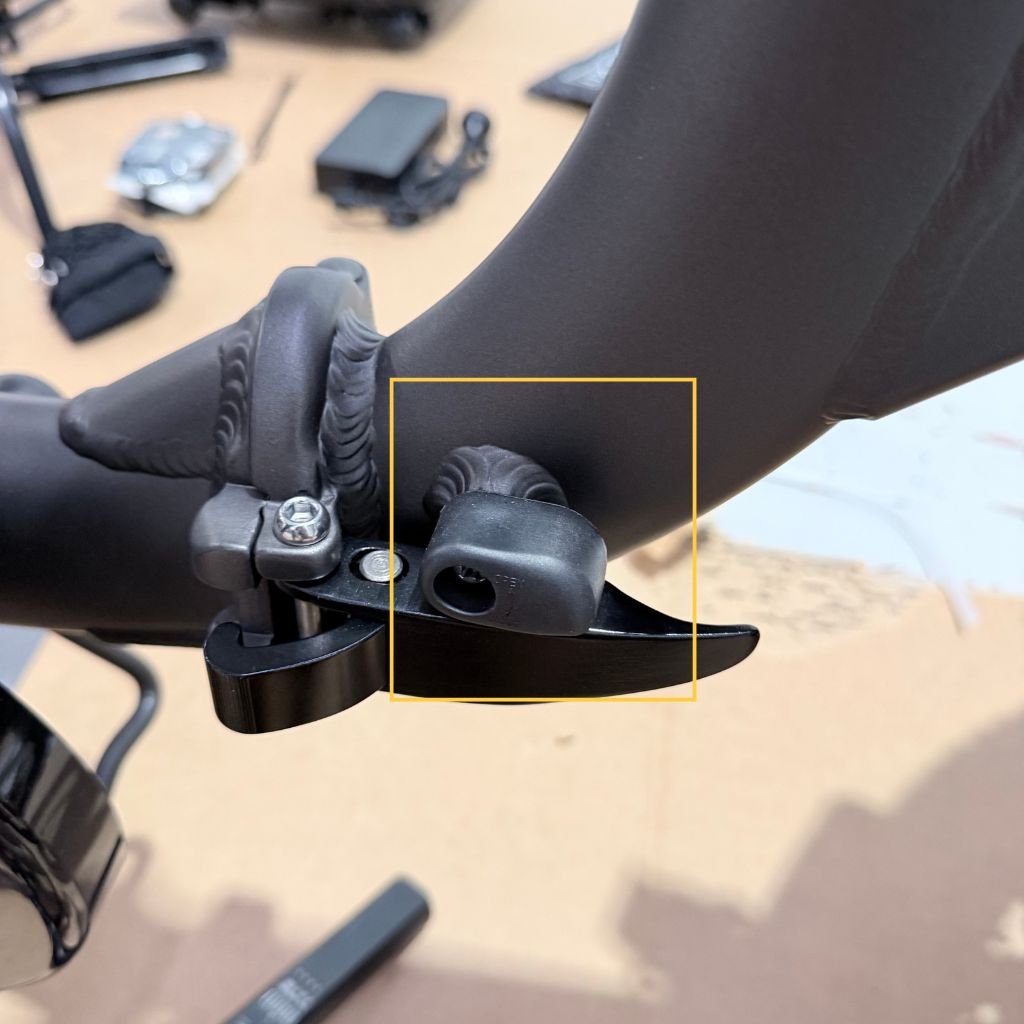
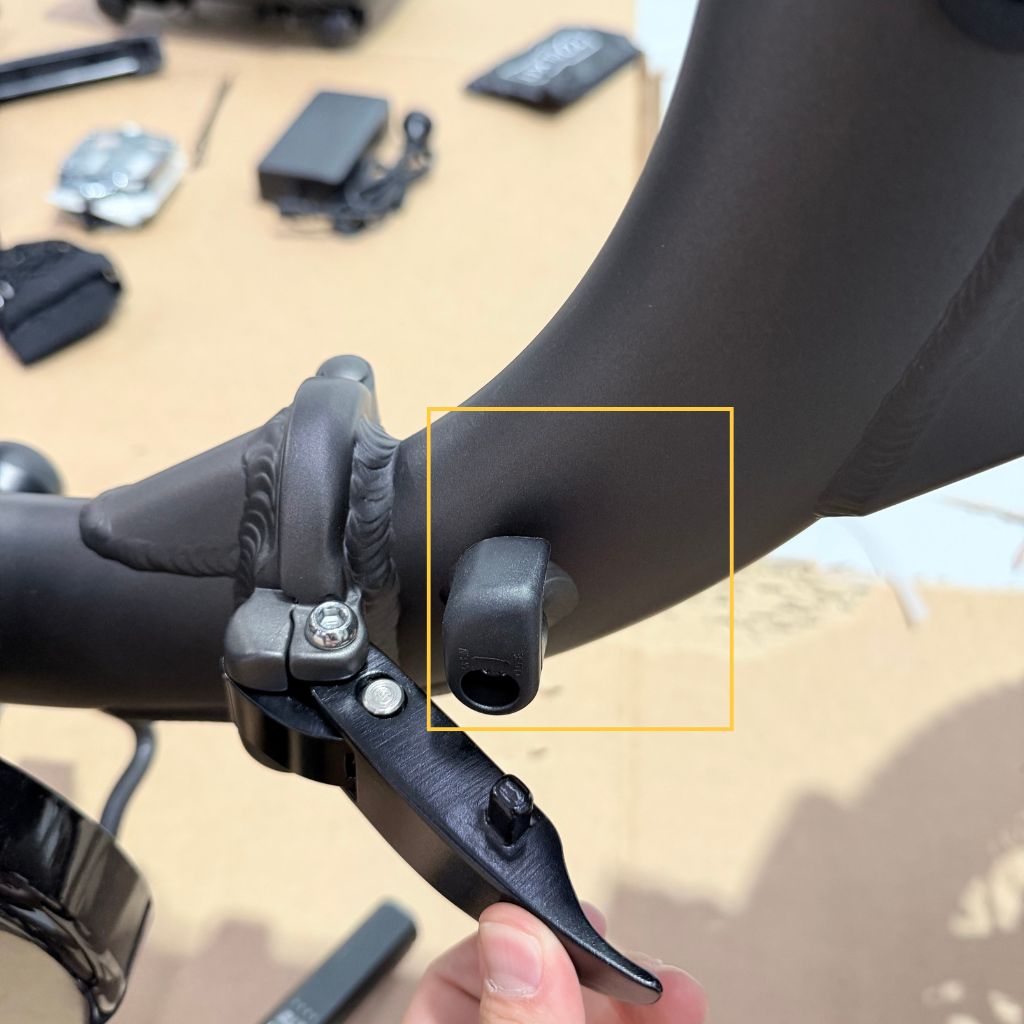
- Central-fold: With all packaging removed, unfold the trike by pulling the front fork forward so it sits in front of the rear wheels. Close and lock the central folding latch by opening the black latch and ensuring the secondary arm clasps the frame before squeezing it fully shut. Rotate the top cover section so it fully covers the exposed pin. The trike is now properly unfolded and ready for the next assembly step.
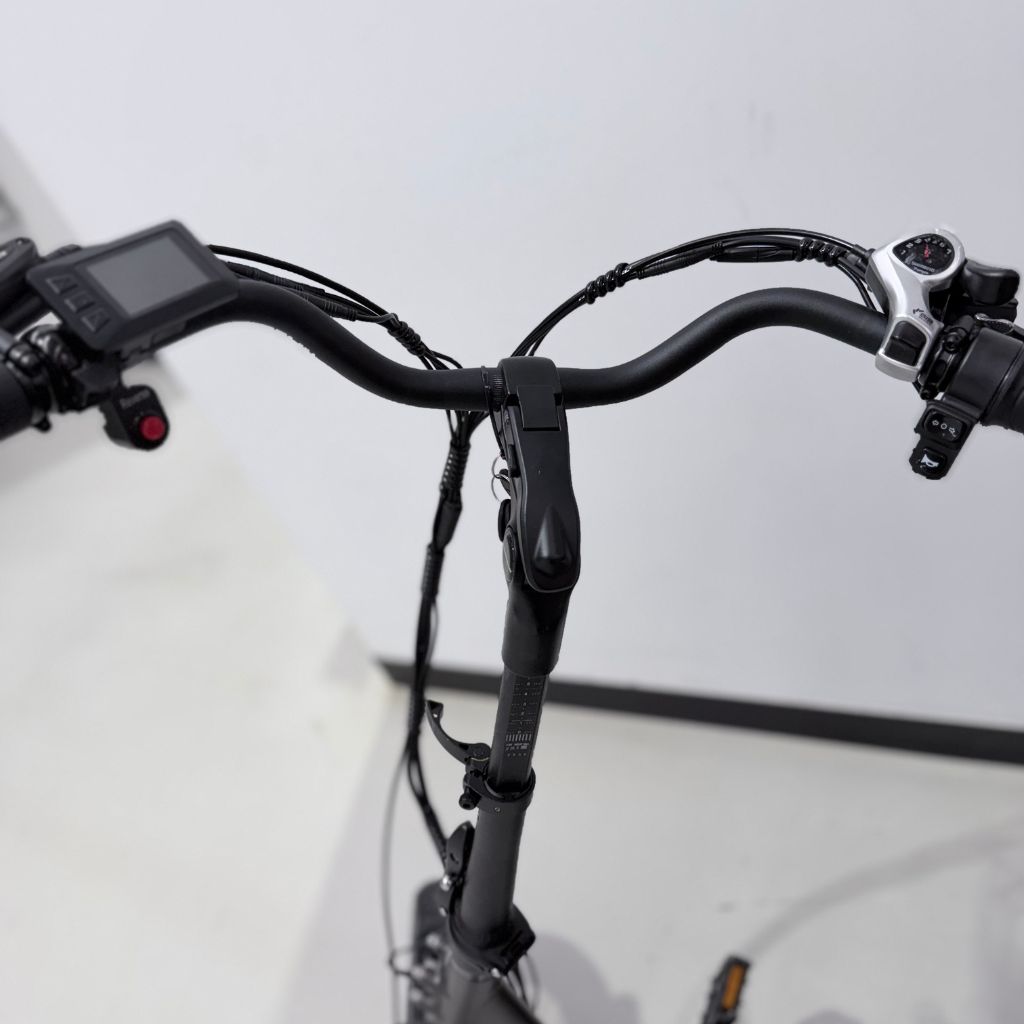
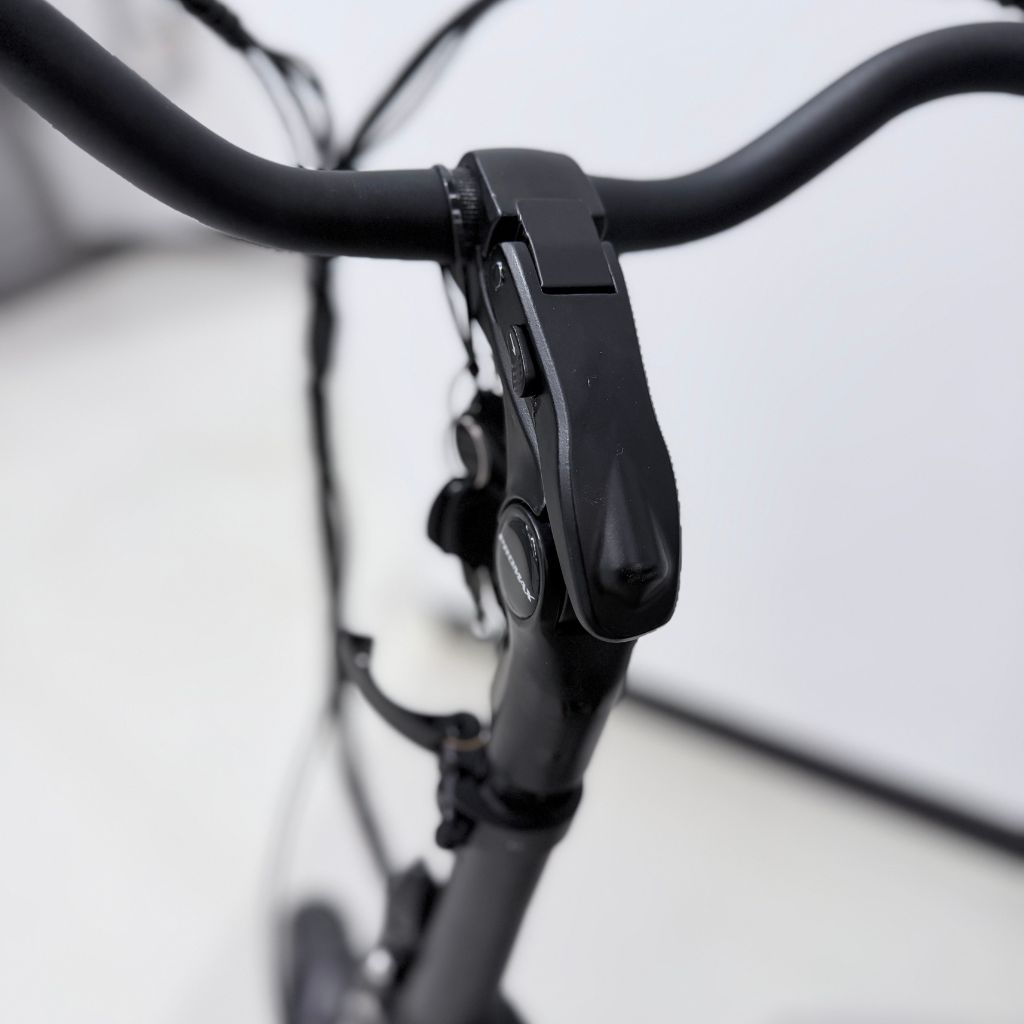
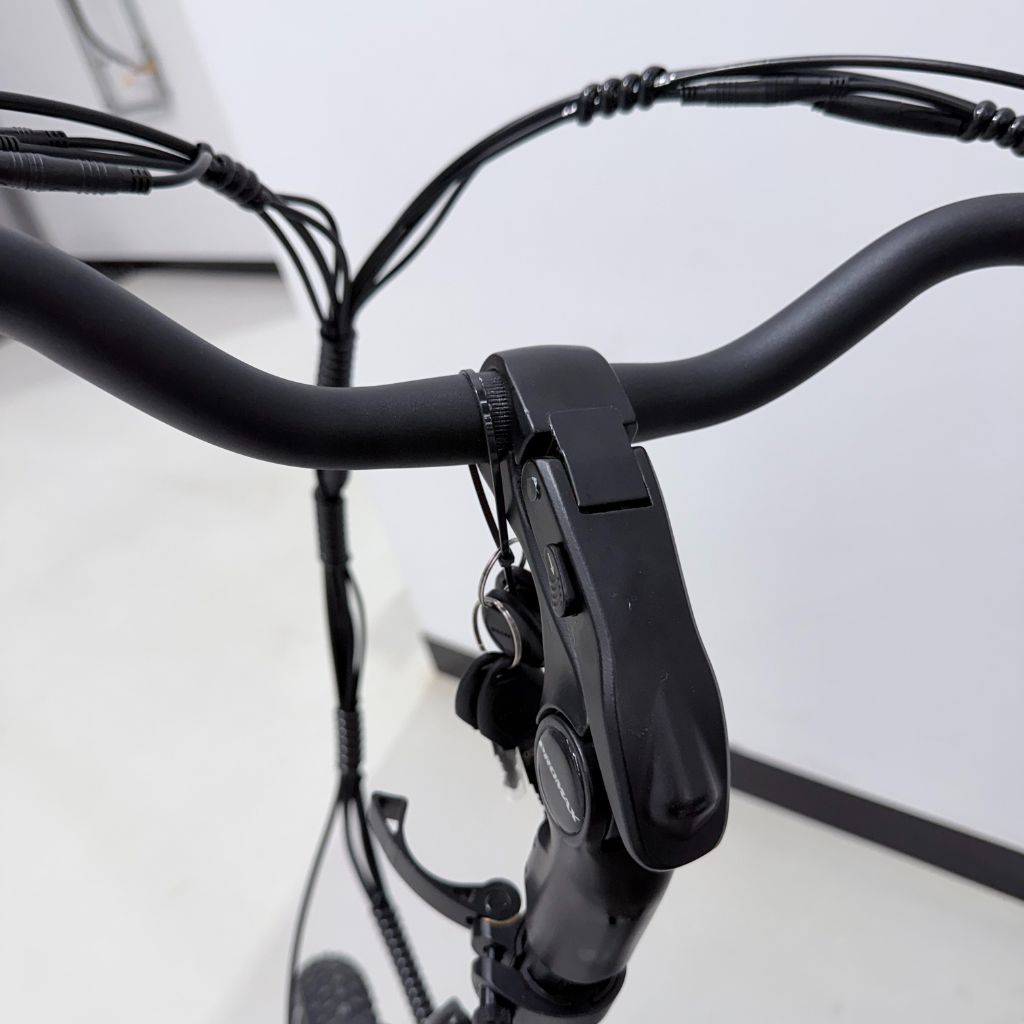
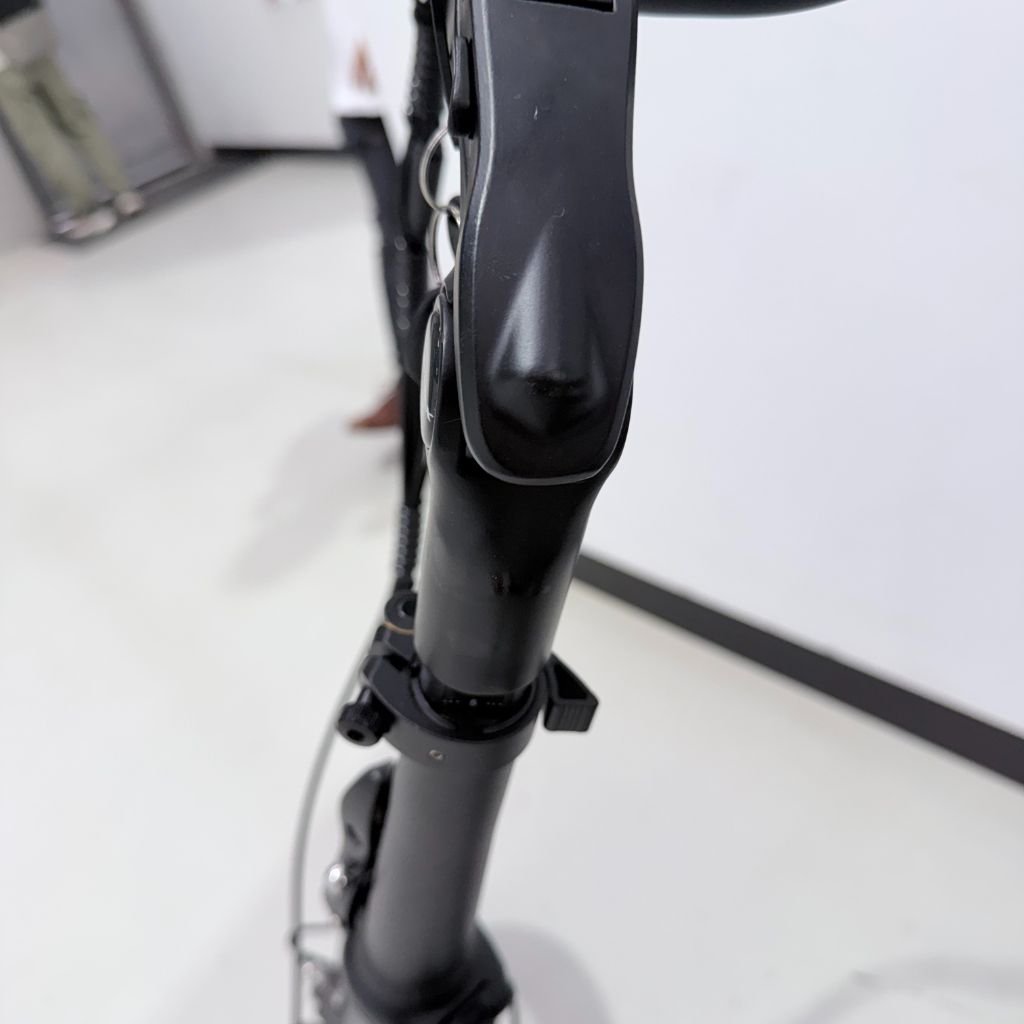
Folding-out handlebar: Unfold the handlebar upwards until it is in the riding position, then close the stem latch by pressing it towards the handlebar firmly so it locks.
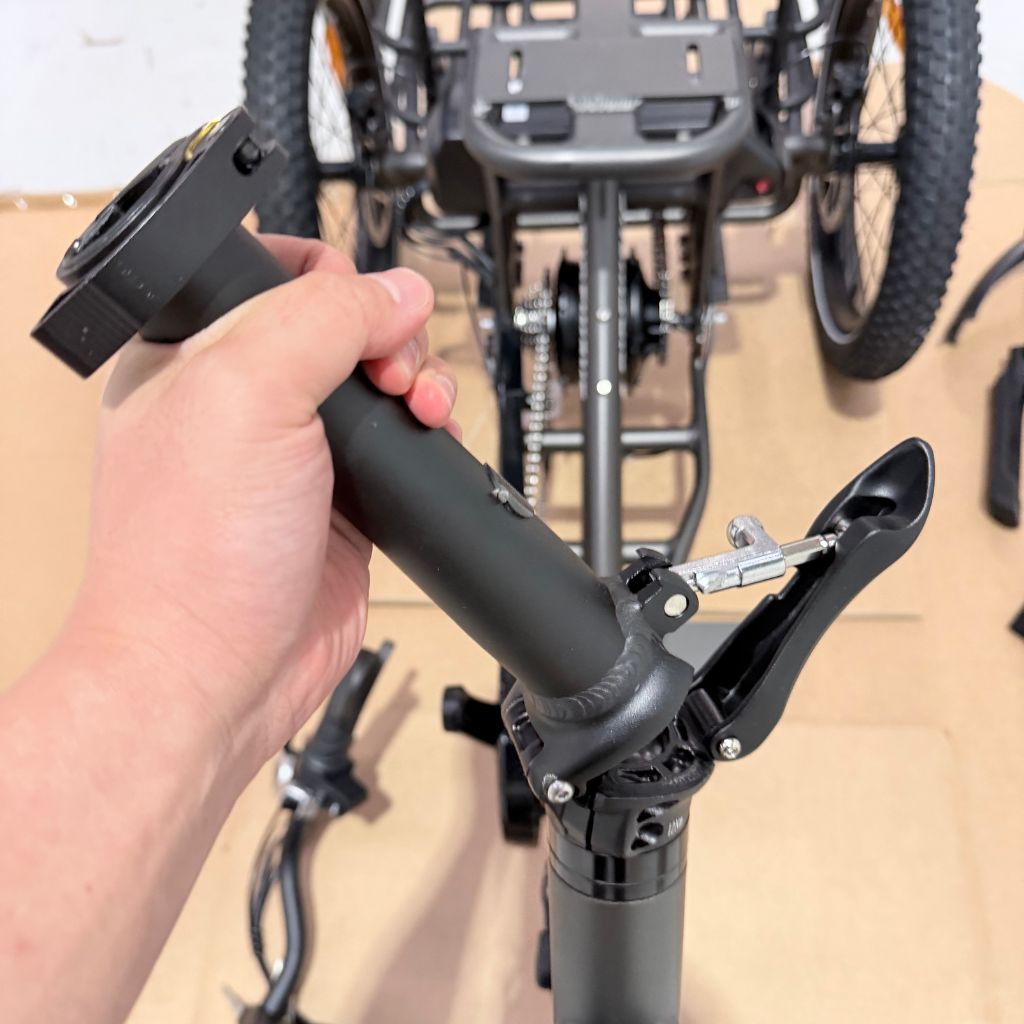
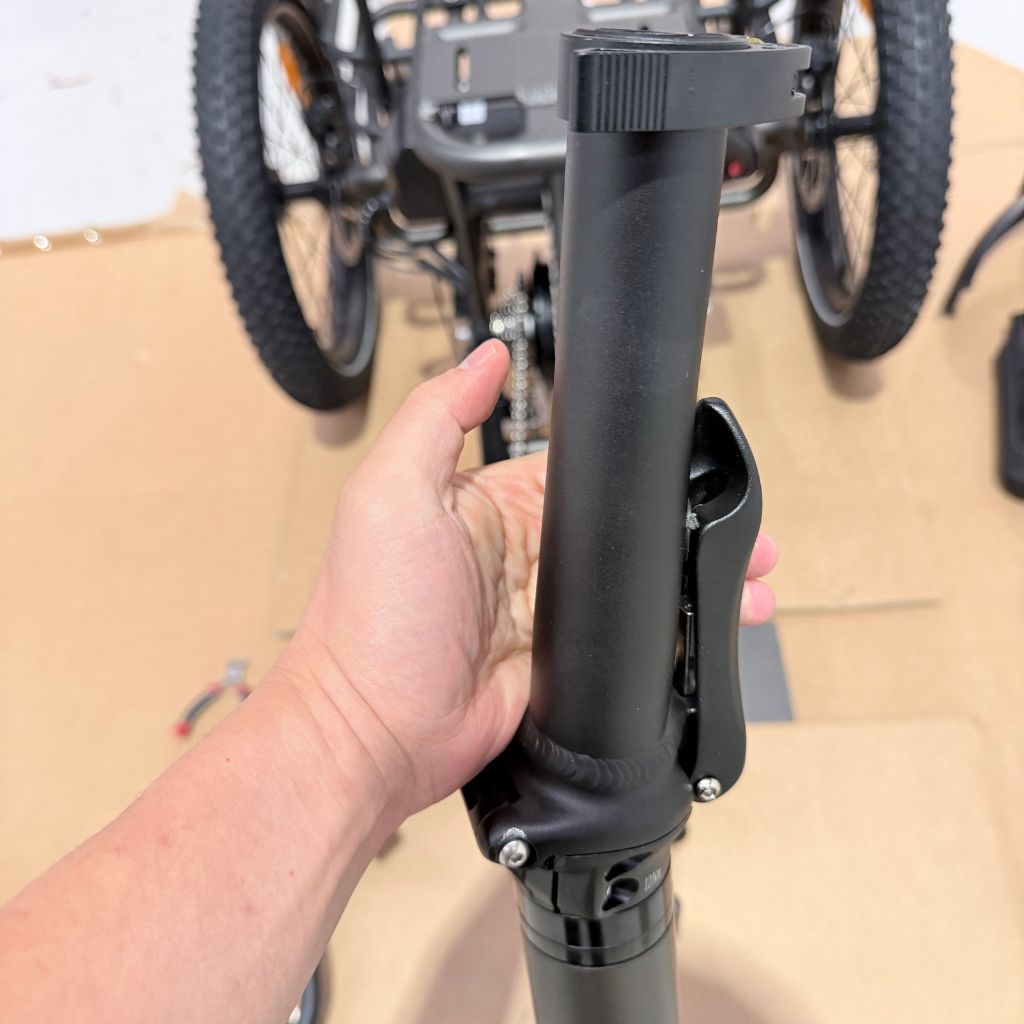
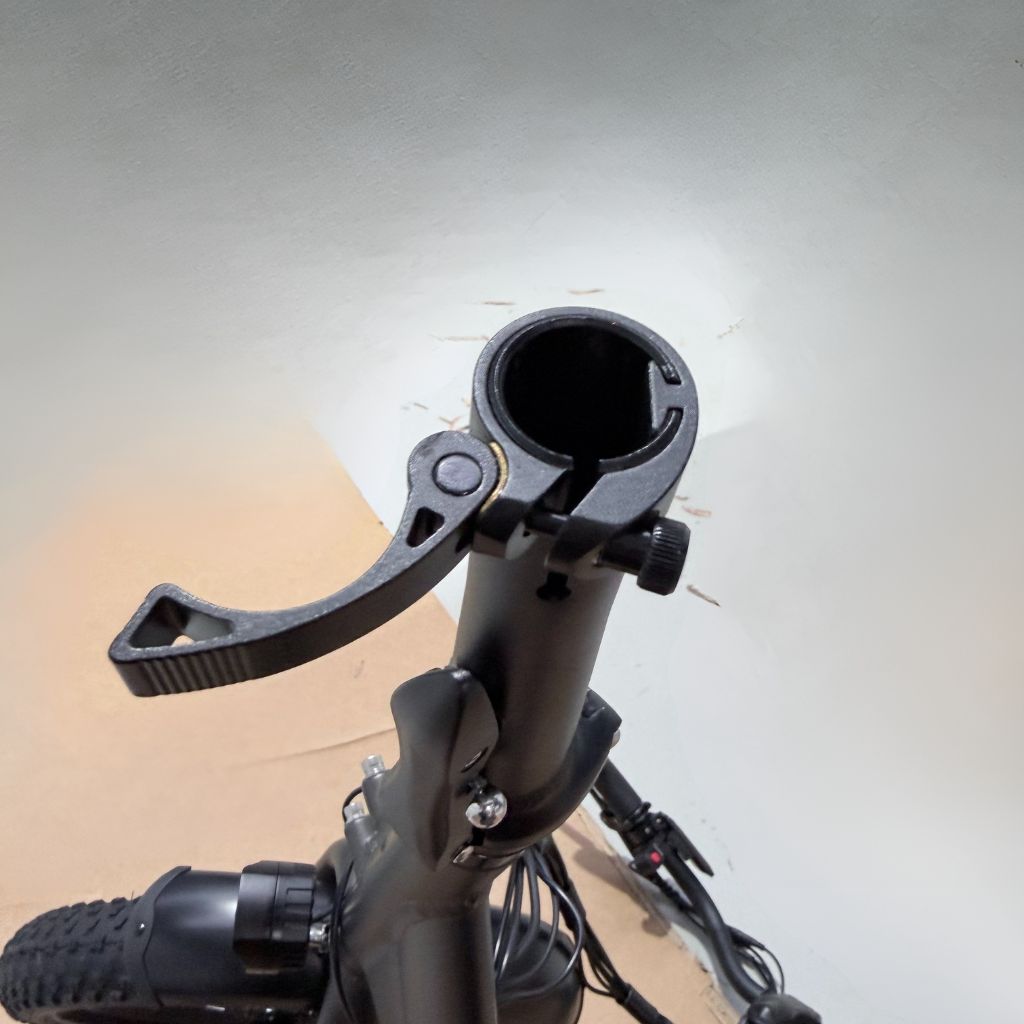
Inserting Handlebar: Open the handlebar clamp lever and slide the handlebar into the folding stem, making sure all cables run neatly towards the front of the trike. Set the bar at a comfortable riding height, then close the clamp lever so the handlebar is securely held in place.
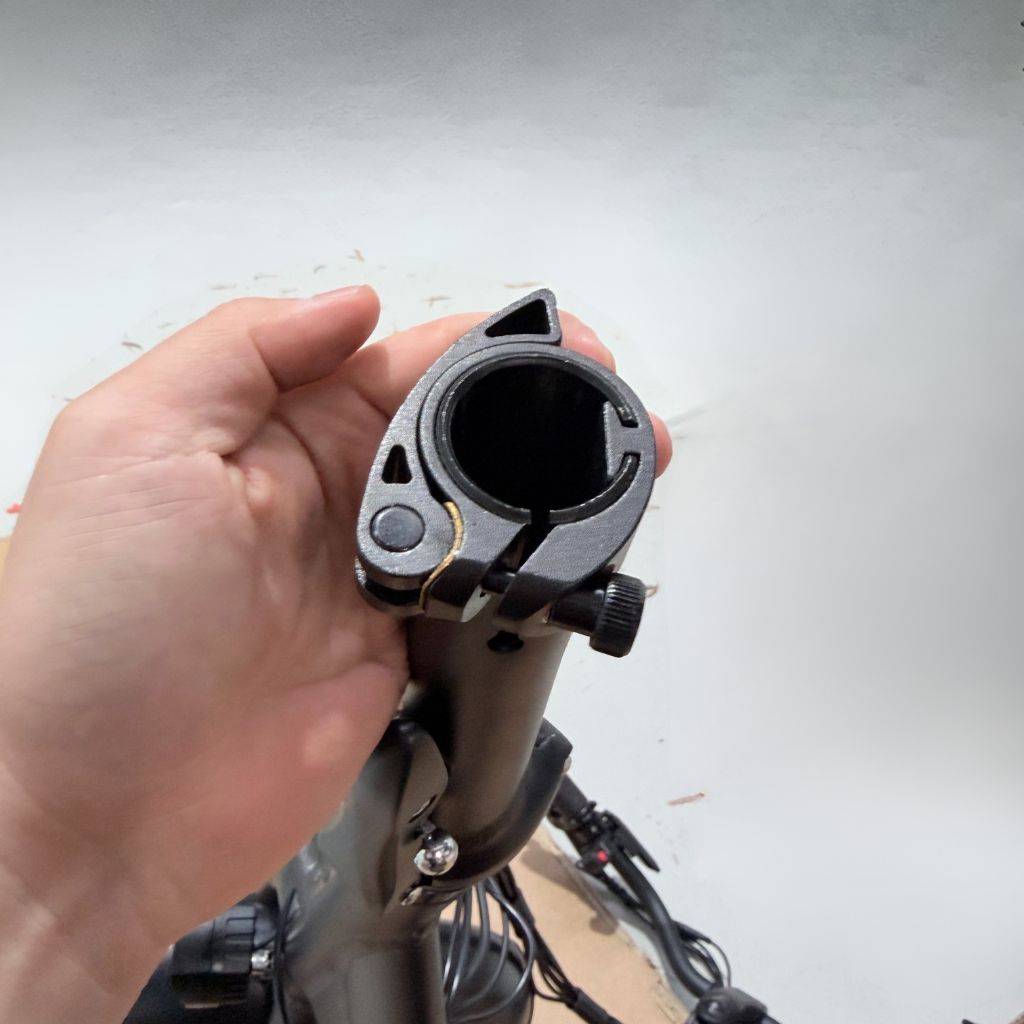
Step 3: Saddle Assembly
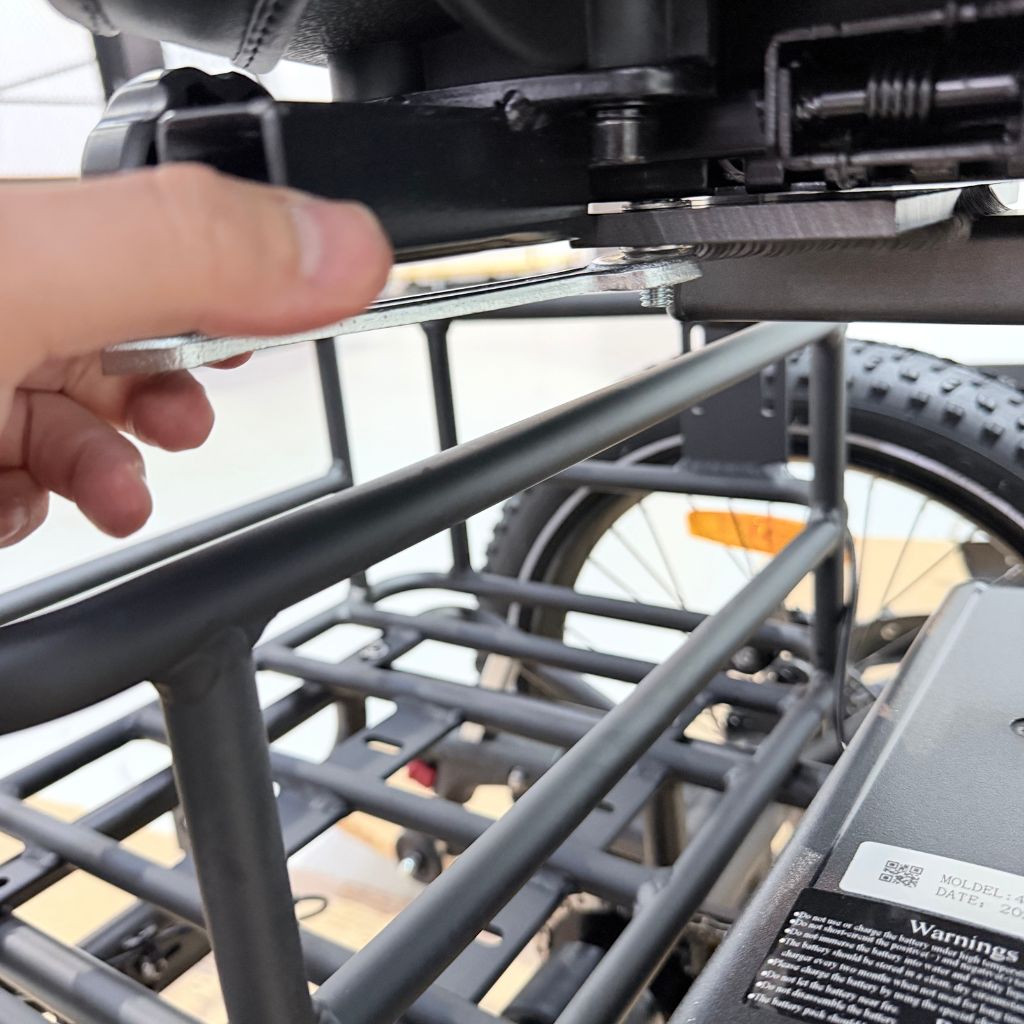
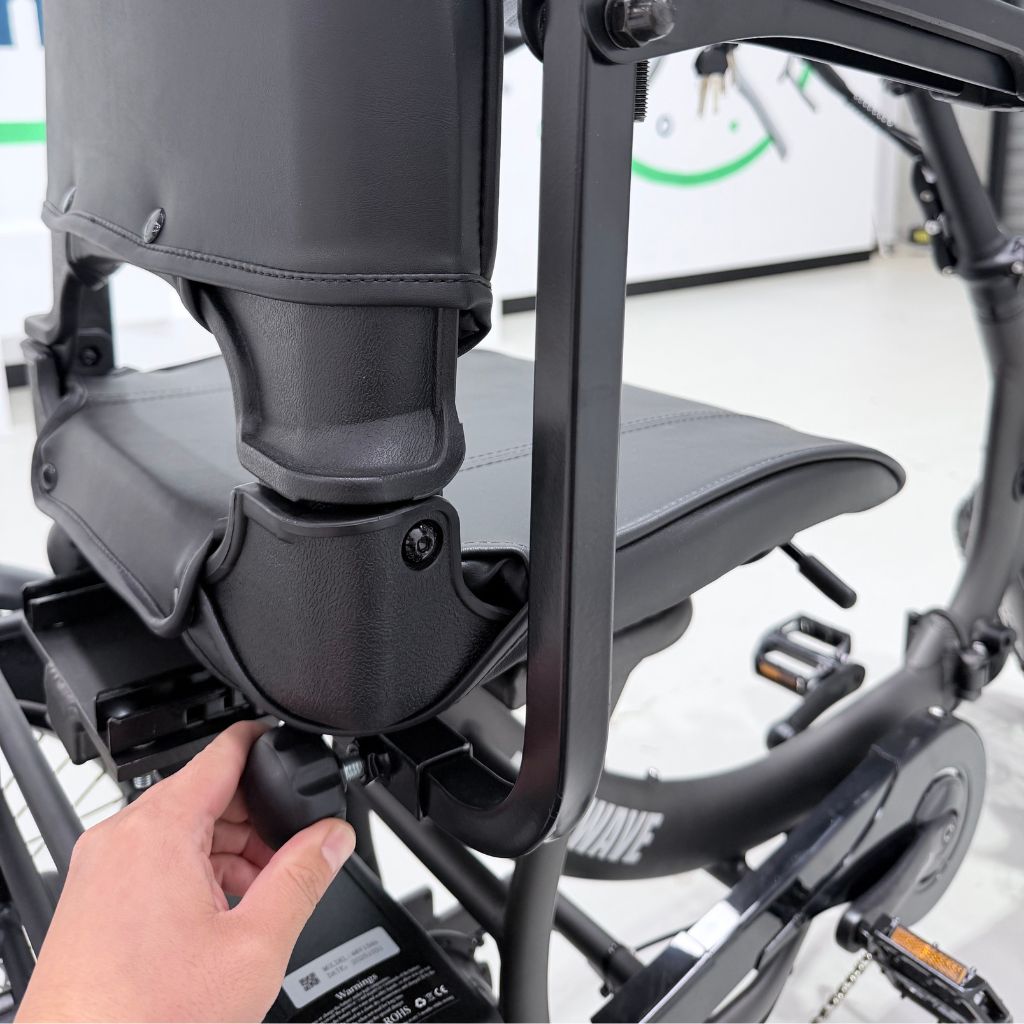
- Preparing seat: Remove the four nuts from the bolts on the underside of the saddle using a 13mm wrench or ratchet. Insert these four bolts into the mounting points on the frame, just above the battery. Using the 13 mm wrench, tighten the nuts back onto the bolts until the saddle is firmly secured to the trike and cannot move.
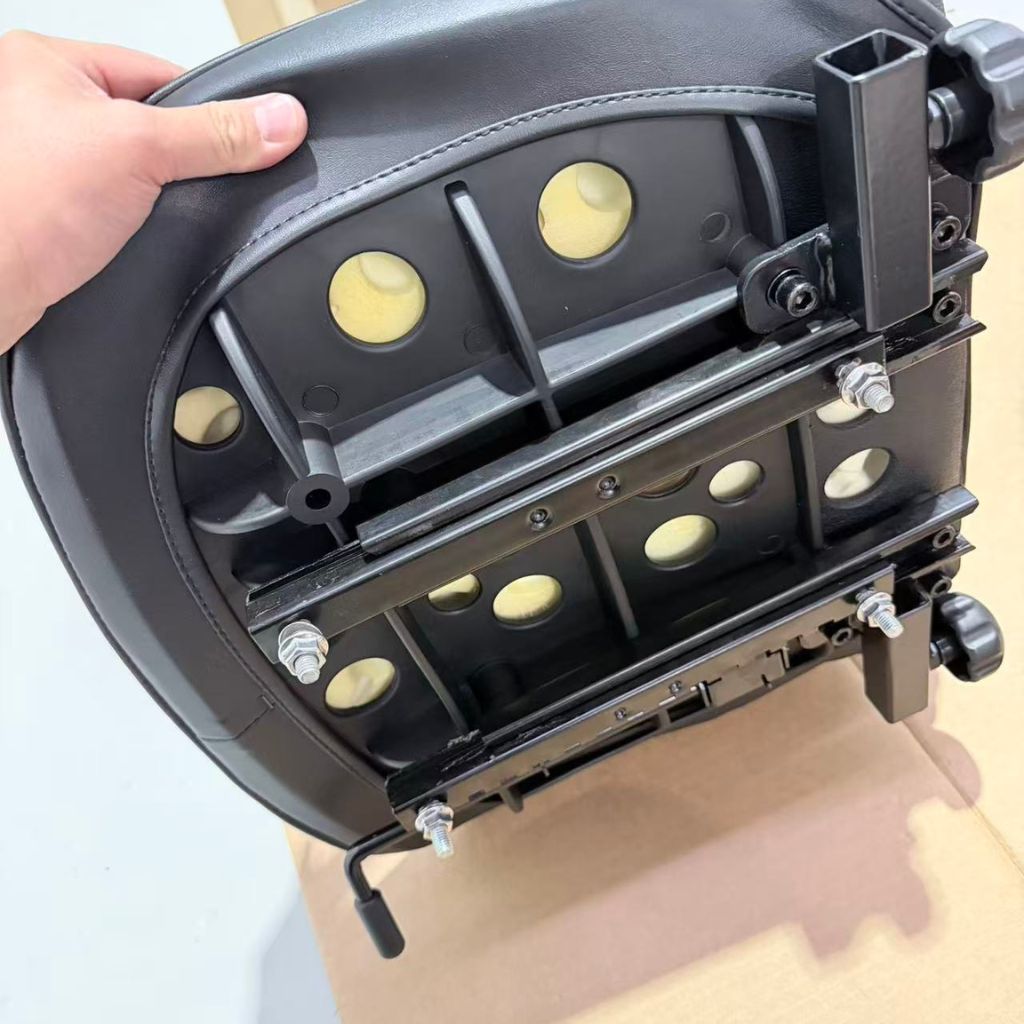
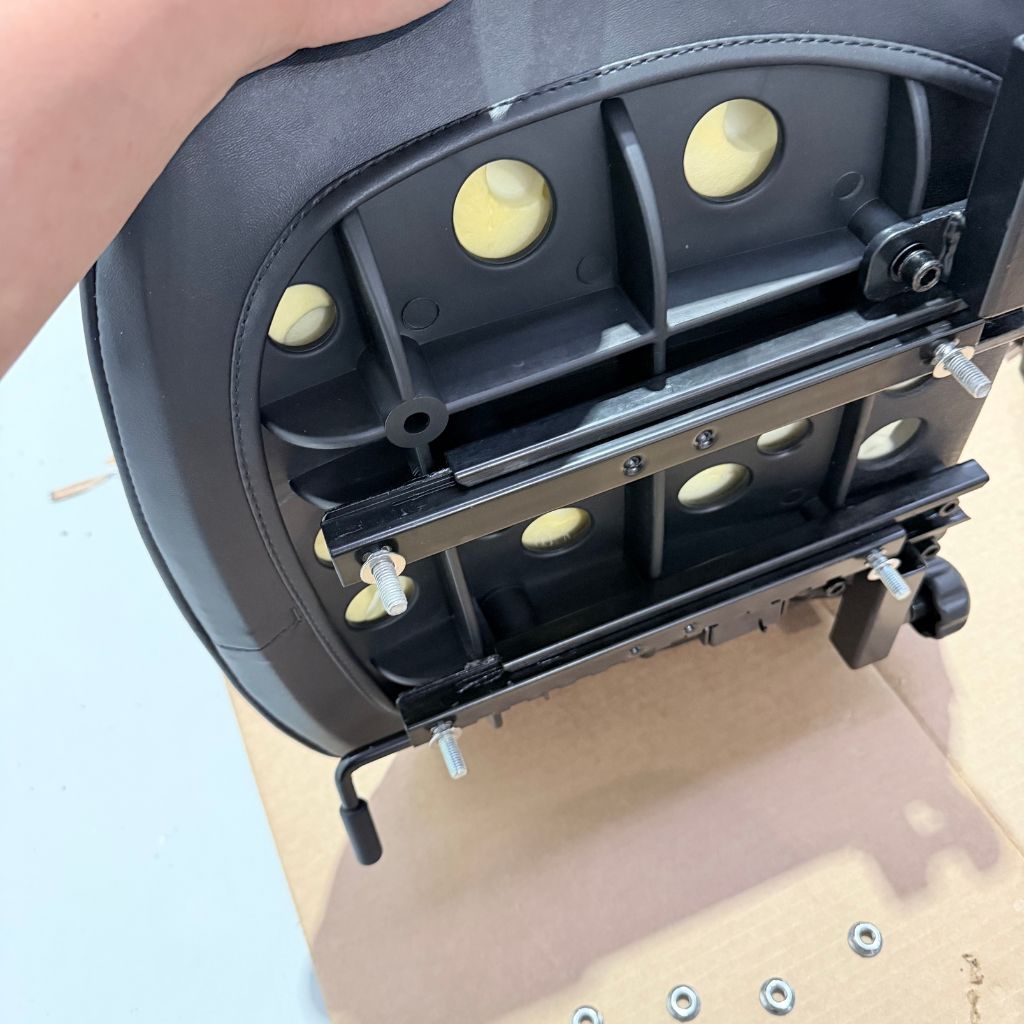
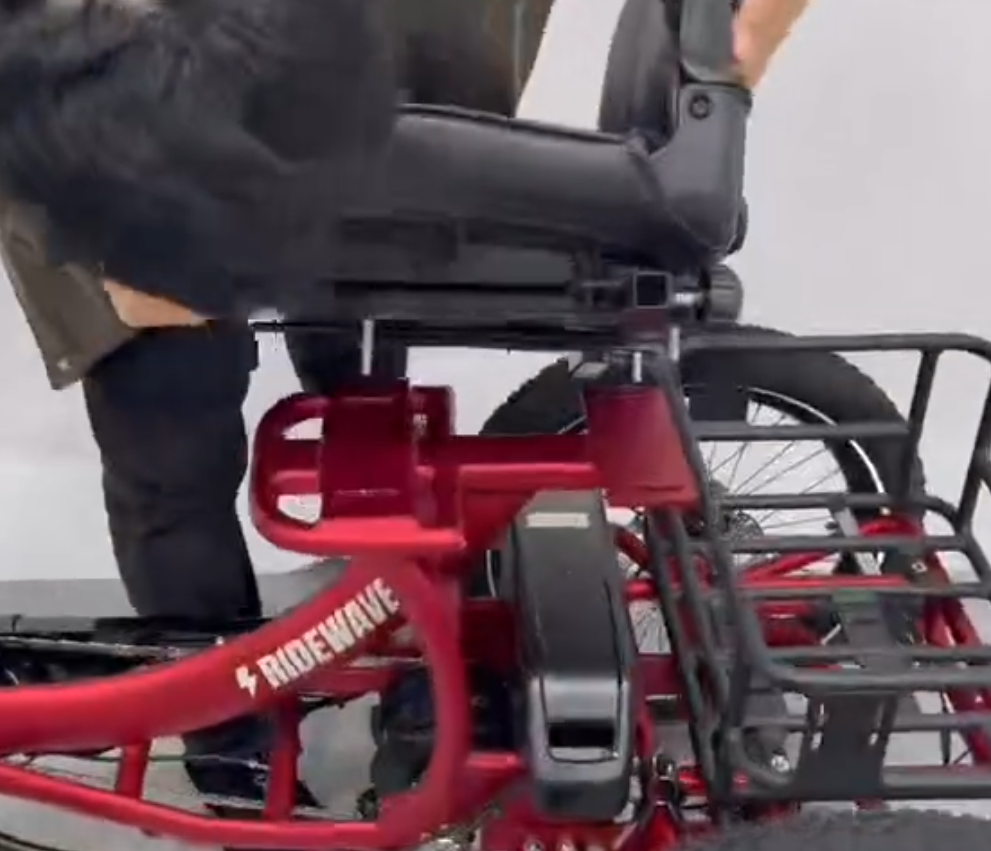
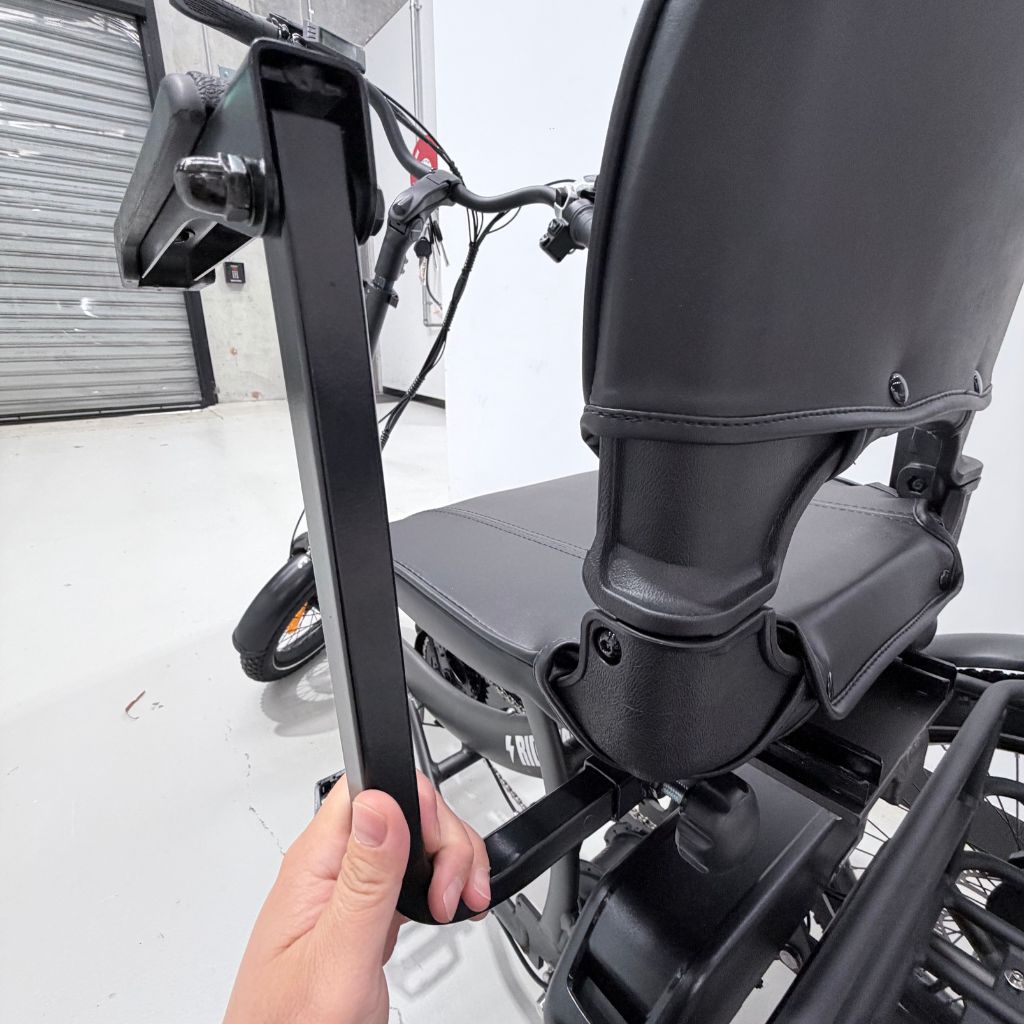
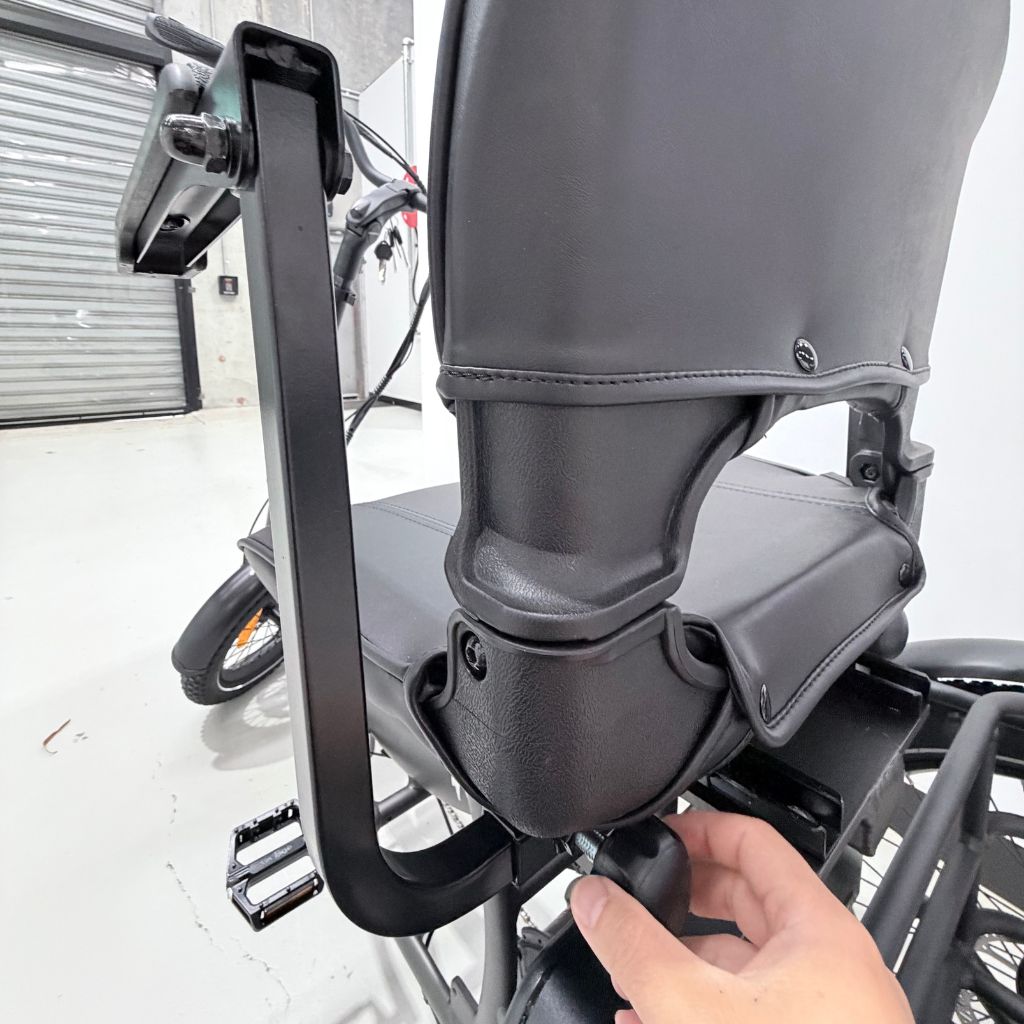
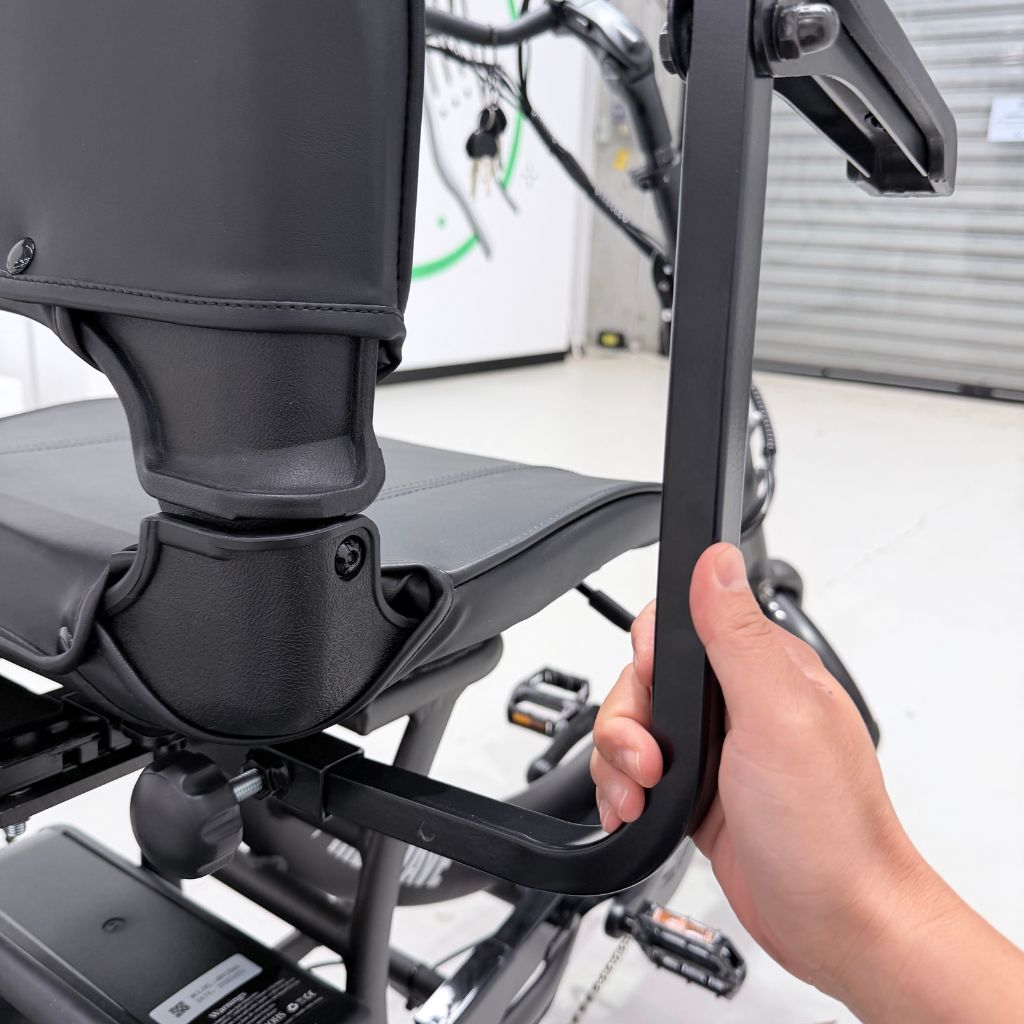
Attaching arm rests: Locate the two arm rests in the box and insert them into the supports on each side of the saddle so they initially point straight up. Tighten them using the two large fasteners at the rear of the saddle. Once secure, press the arm rests down so they sit flat and parallel with the seat surface, ready for riding.
Step 4: Installing Rear Mudguards
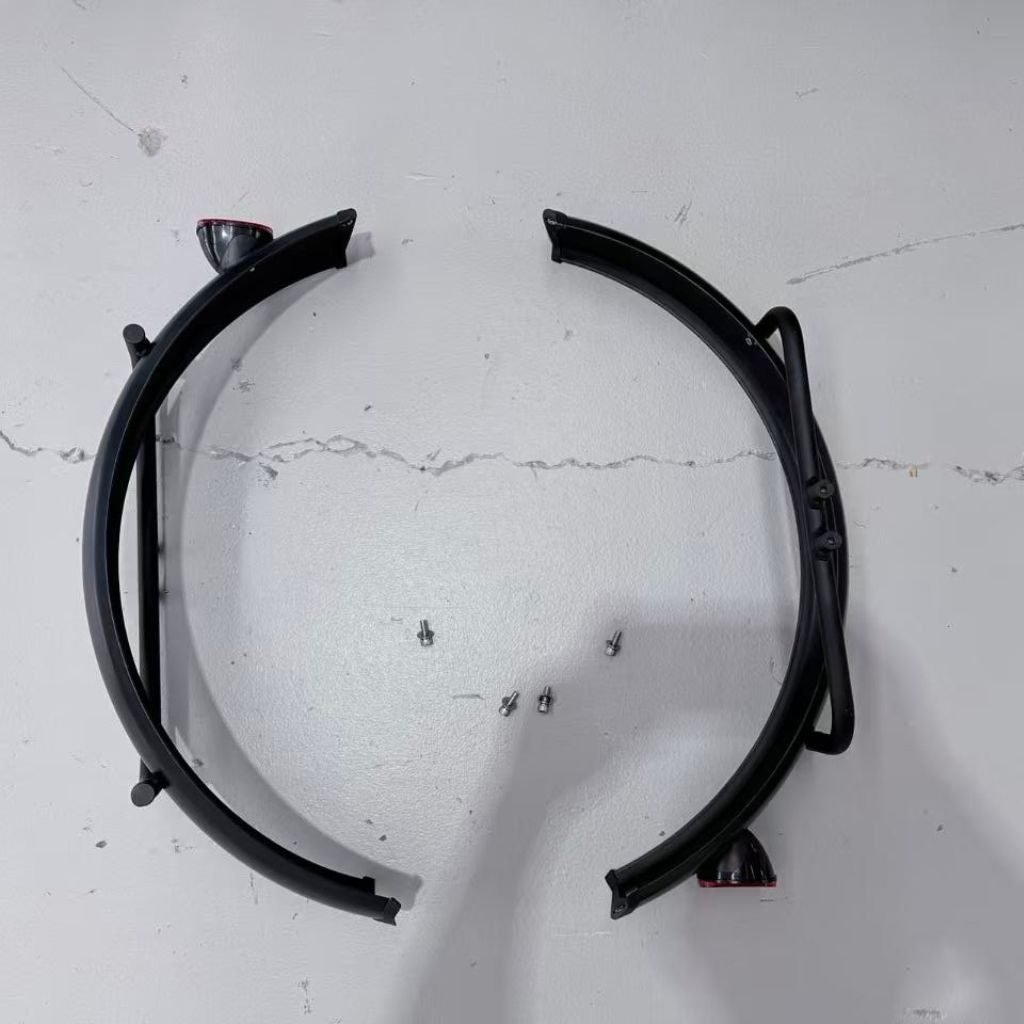
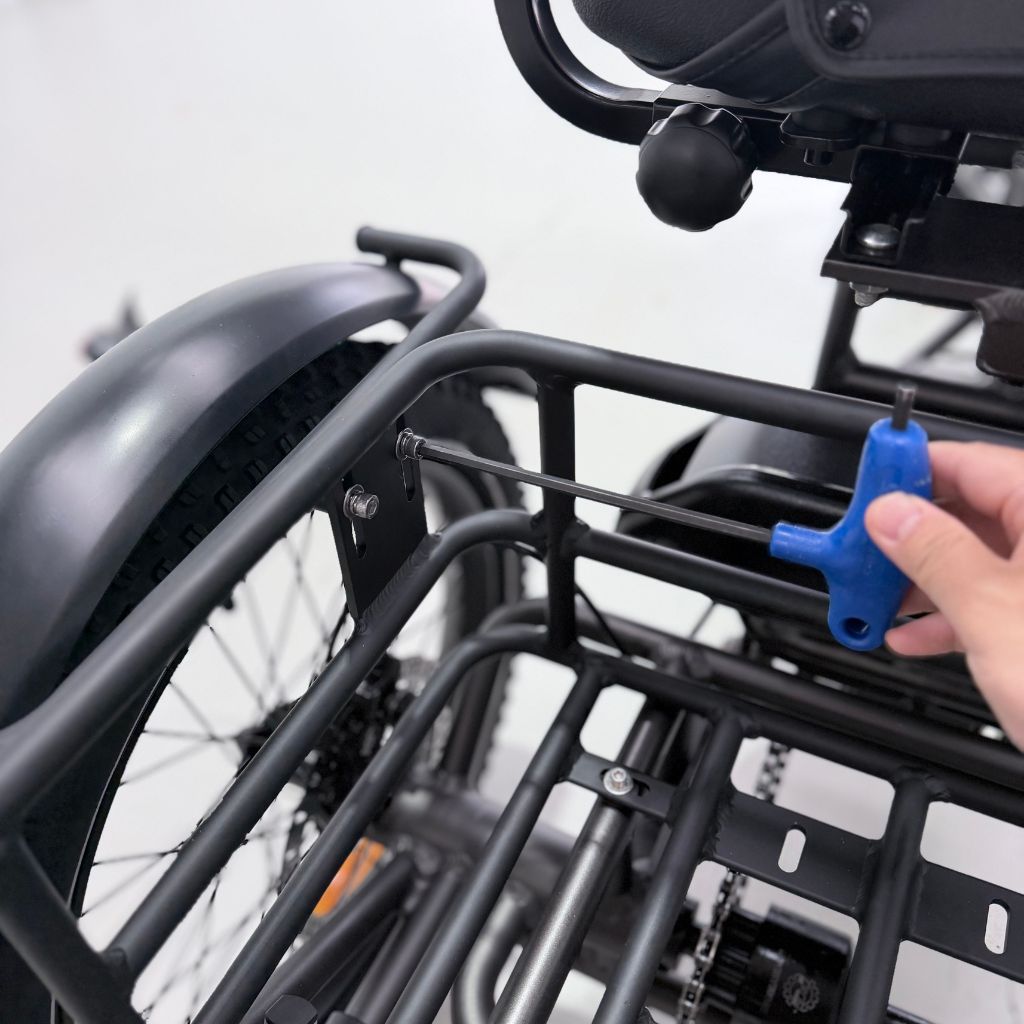
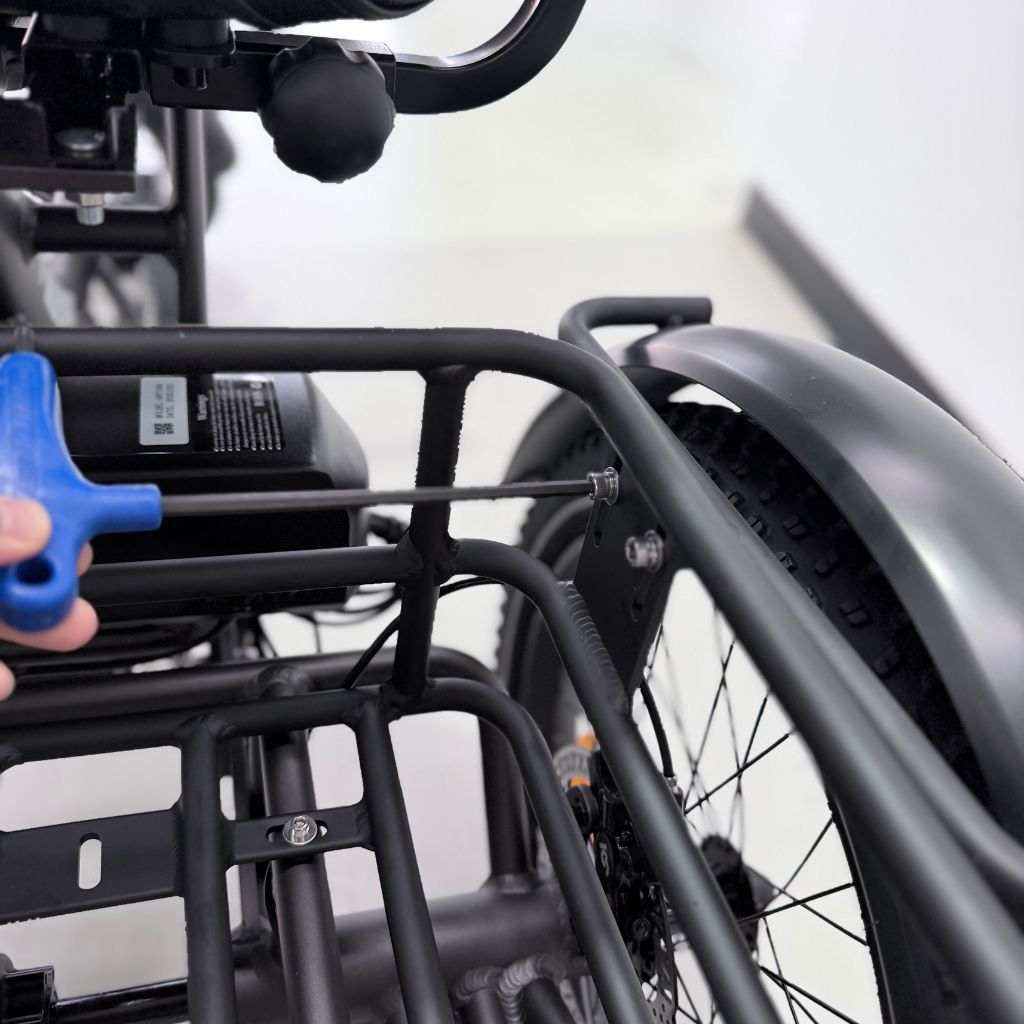
- Fitting the mudguards: Use a 5 mm Allen key to remove the mounting screws on the inside edge of each rear mudguard position. Place each mudguard over its corresponding rear wheel and line it up with the mounting points on the rear basket frame. Ensure the red rear reflectors are positioned at the rear of the trike. Reinstall and tighten the screws so the mudguards are centred over the tyres and do not rub when the wheels rotate. Adjust the mudguards to minimise the gap between the guard and the tyre without restricting rotation; as a general guide, positioning the mounting screws approximately one-third down from the top of the mounting points provides the correct clearance.
Step 5: Assembling pedals
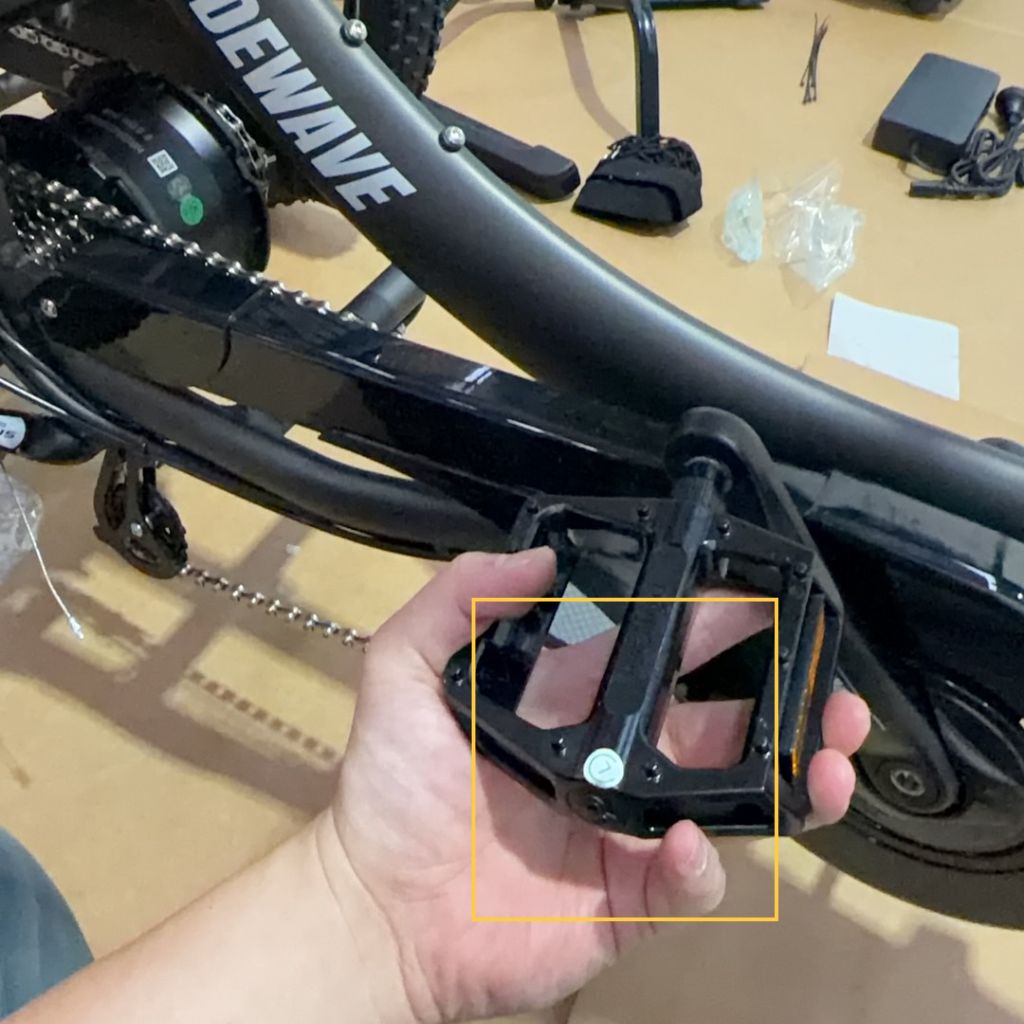
Note: Pedals are side-specific. Before installation, ensure you have the correct pedal by checking the “L” (left) or “R” (right) marking on the sticker or the engraved marking on the pedal itself.
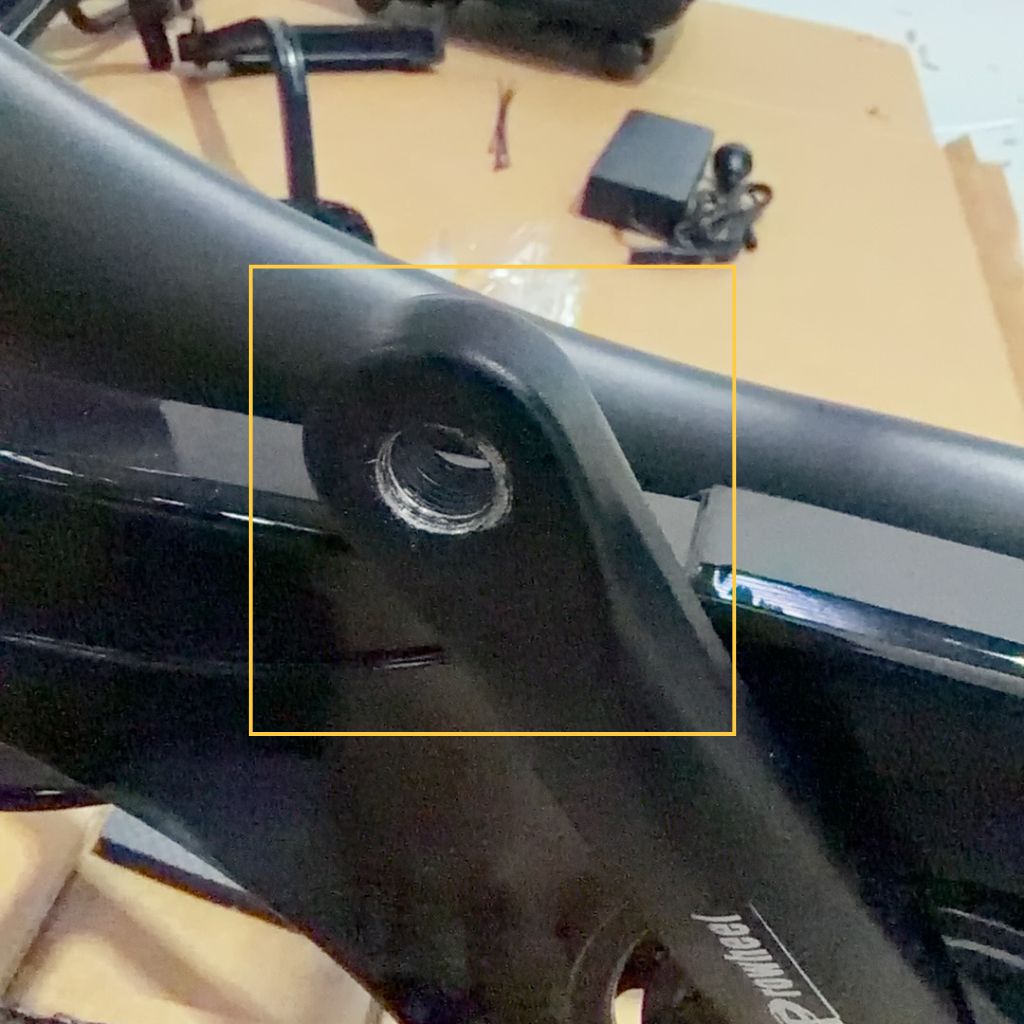
- Greasing pedals: Apply grease to the pedal threads - Begin by applying a small amount of grease to the threads of the pedal. This helps prevent the pedals from seizing in the crank and makes future removals easier.
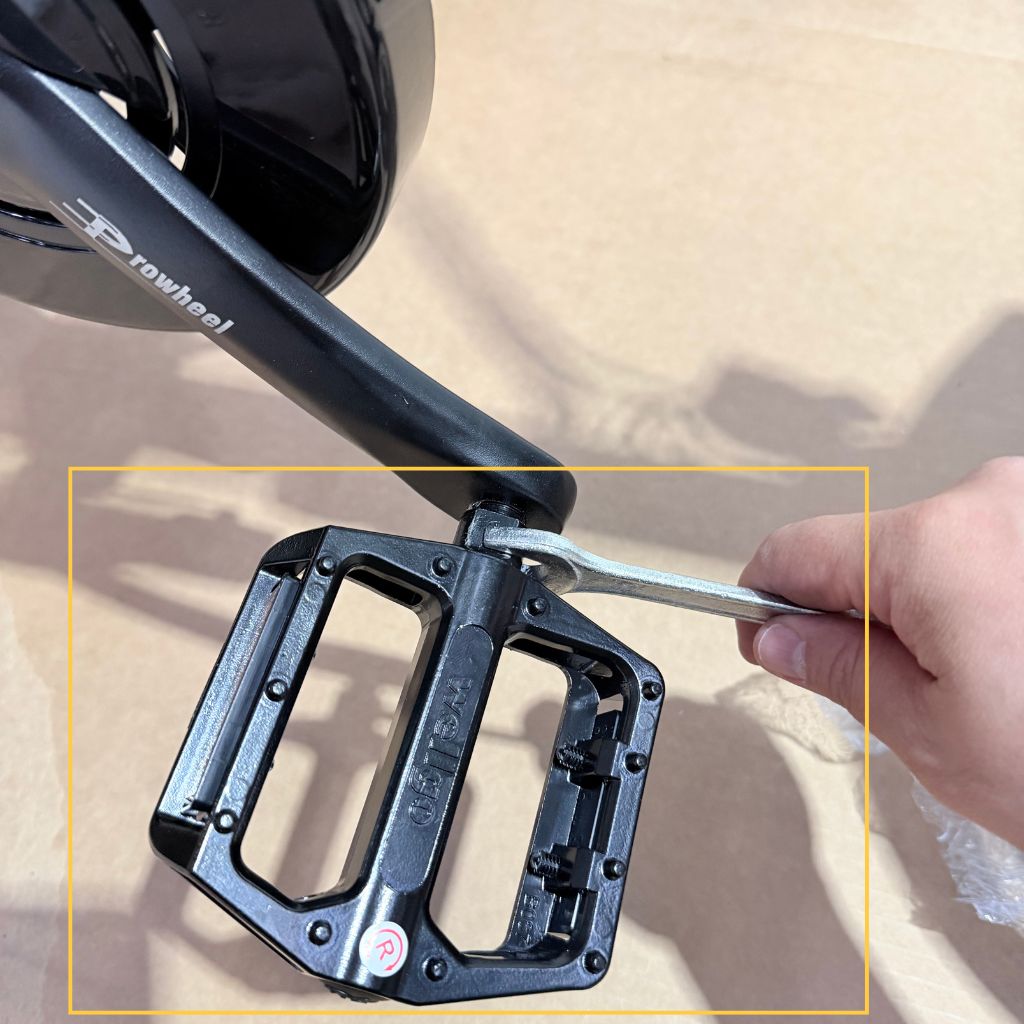
- Attach and tighten the pedals - Insert the pedal into the crank arm and hand-tighten it to ensure it's threaded correctly. Then, use an open-ended 15mm wrench to securely tighten the pedal. Be sure to tighten each pedal in the correct direction: the right (R) pedal tightens clockwise, and the left (L) pedal tightens anticlockwise. This means the direction of tightening should be towards the front of the trike for both pedals.
Step 6: Setup Cargo Basket Net
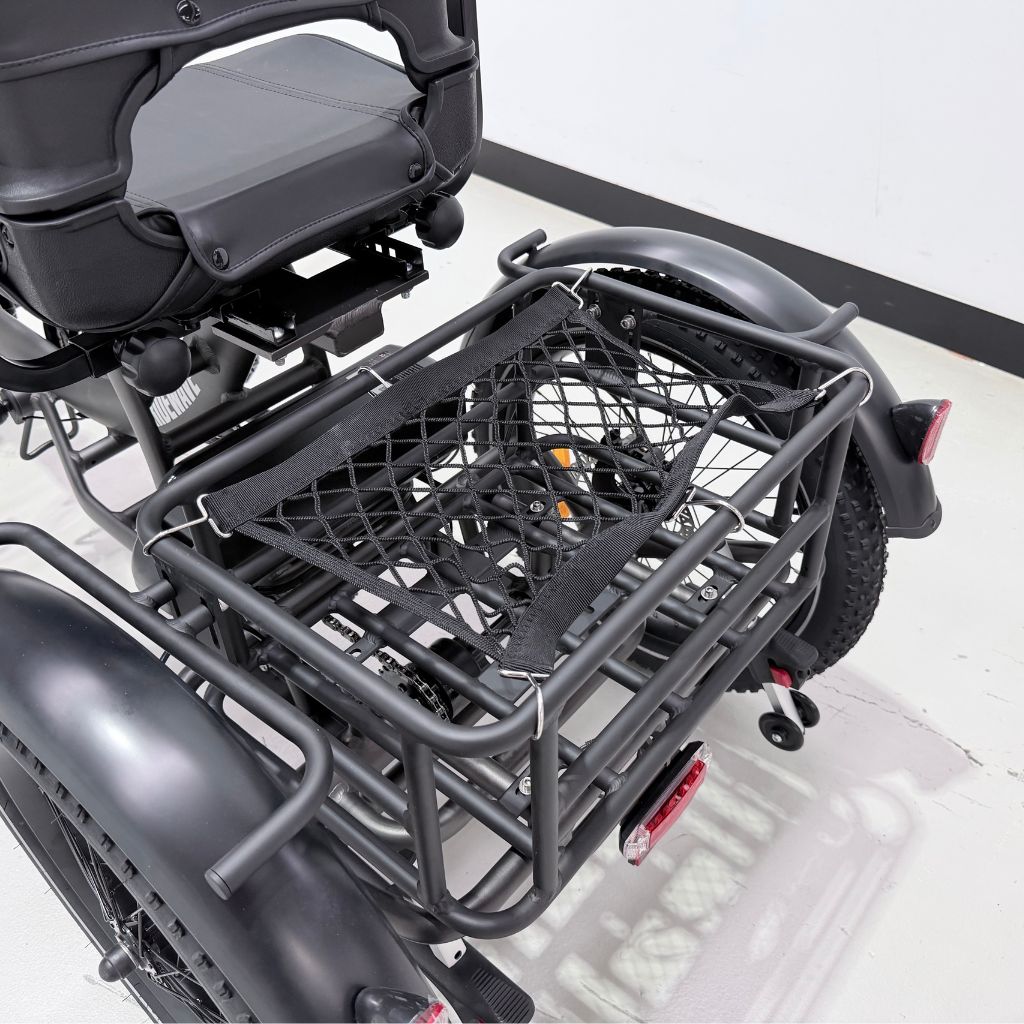
- Installing the mesh net: Position the mesh net over the top of the rear cargo crate. Using the silver hooks attached to the elastic straps, secure each hook onto the outer edges of the cargo crate frame. Ensure the net is evenly tensioned on all sides so it sits flat and securely holds items in place without sagging.
Step 7: Pumping the tyres
- When preparing to pump the tyres:
- Use a tyre pump to inflate the tyres to the recommended PSI listed on the side of the tyres. For the Platypus, this is a maximum inflation pressure of 35 PSI.
Inflating tyres: Pump both the front and rear tyres to the pressure specified on the tyre sidewall. For the Platypus, the recommended PSI is between 5-35.
For a Softer Ride: We recommend a PSI range of 5-20 for a smoother, more comfortable ride. This pressure is ideal for the Platypus and best suited for riders who frequently encounter uneven or off-road terrain.
For a Firmer Ride: If you prefer a sturdier and more responsive feel, aim for a PSI range of 20-35. Higher pressure reduces the frequency of pumping and is better suited for consistently flat terrain, such as urban roads.
Finding Your Ideal PSI: Experiment with different pressure levels in the front and rear tires until you discover what feels best for your riding style and terrain. Adjust as needed to achieve your desired balance of comfort and performance.
- Use a tyre pump to inflate the tyres to the recommended PSI listed on the side of the tyres. For the Platypus, this is a maximum inflation pressure of 35 PSI.
Seasonal Tyre Pressure Adjustment
Tyre pressure can be affected by temperature changes. During warmer summer months, air inside the tyre expands, which can increase pressure. For this reason, slightly lower tyre pressures may be more appropriate in hot conditions to prevent over-inflation.
In cooler winter months, air contracts, which can cause tyre pressure to drop. You may need to inflate the tyres slightly more frequently to maintain your preferred PSI. Always recheck tyre pressure before riding, especially when there are significant temperature changes.
Important:
While inflating, pause occasionally to check that the tyre bead (indicated with arrows) is properly seated around the rim.
Ensure that the pumping nozzle is correctly attached to the inner tube valve, air should escape before the lever is adjusted. (Proper attachment circled in red)
If the bead starts to rise unevenly, deflate the tyre slightly and press the bead back into place before continuing.
Ensure the tyre bead line (a thin moulded line near the sidewall) is evenly positioned just above the rim on both sides.
If any part of the inner tube becomes exposed during inflation, stop immediately as this can cause the tube to burst.
Properly seating the bead ensures safe and consistent tyre inflation.
Final Checks
Before riding your Ridewave Platypus Folding eTrike, perform the following checks:
- Ensure all bolts are tightly fastened.
- Test the folding mechanisms to ensure they are secure.
- Check the tire pressure and inflate as needed.
Congratulations — your Ridewave Platypus Folding e-trike is now fully assembled and ready to ride. Enjoy your e-trike, and don’t hesitate to contact our support team if you need any further assistance.